

Most founders are using an outdated map. The SaaS playbook doesn’t work anymore.
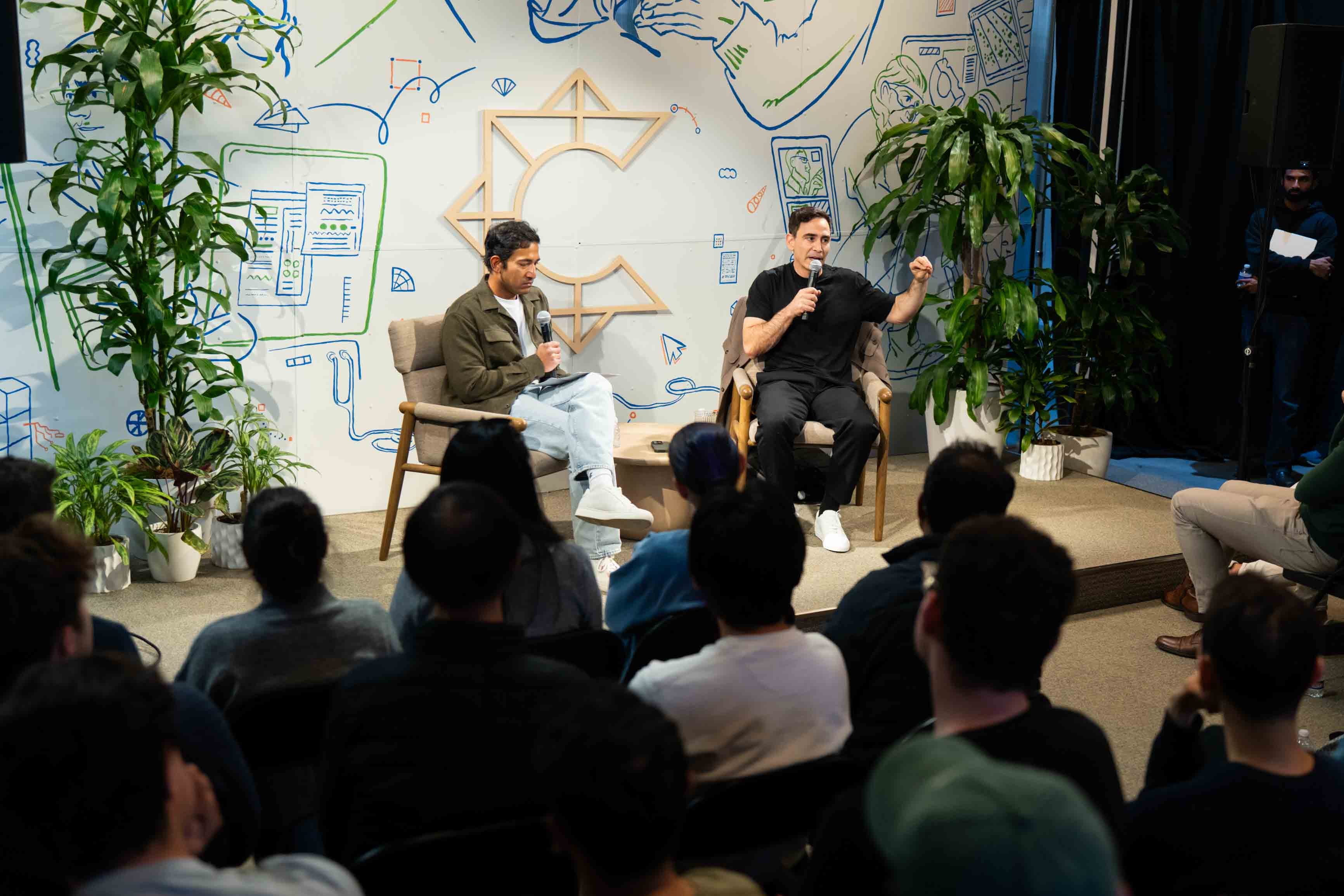
We hosted Elad Gil at SPC for a fireside chat a few weeks back. He might be the biggest crusader against conventional wisdom that I know. Here are a few takeaways.
Lingering on stagnant ideas is the most common and fatal mistake founders make right now. The market is moving with unnatural velocity. If your product is not gaining immediate traction, the market is giving you a clear signal. Kill it and move on. When a product works in this market, it works quickly. There is no prize for bleeding out slowly over three years on an idea that nobody wants.
Culture is winning. Culture is not kombucha on tap. It is not ping-pong tables or offsites. Fast traction is the only culture that matters. When a startup is growing exponentially, every operational sin is forgiven. When growth stalls, every minor friction point becomes a cultural crisis. Focus entirely on moving the metrics. The culture will follow the traction.
Foundation models have crystallized into a capital-intensive oligopoly. OpenAI, Anthropic, and Google control the frontier. Open-source models survive primarily through the massive balance sheets of companies like Meta. Competing at this base layer without billions in compute and a hyperscaler partnership is a dead end. The infrastructure map is drawn. Startups must accept this reality and build higher up the stack.
Buyers are uniquely open to unproven tools right now. Corporate boards have mandated AI strategies from the top down. Every CEO is asking their team for an AI plan. Big law firms are notoriously slow adopters of technology, yet they adopted Harvey early. This willingness to experiment is unprecedented. The sales cycle has compressed. Startups must capitalize on this temporary window before procurement departments return to their usual friction.
Delegation is a trap. Scaling founders are consistently told to hire executives, step back, and delegate. This is a trap. Delegation is necessary for organizational scale, but stepping away from the product is fatal. Builder CEOs consistently outperform. Unapologetic micromanagement is not a flaw. It is a requirement. The transition from maker to manager ruins companies when founders lose their grip on the core product details.
You don’t always need a co-founder. Silicon Valley insists every startup needs a co-founder. This is a recent invention. Accelerator programs normalized the equal-equity duo to simplify batch processing. Historical data rejects this entirely. Michael Dell built his company alone. Jeff Bezos built Amazon alone. Larry Ellison drove Oracle by himself. Solo founders can and do win.
Incumbent reaction time is compressed. Startups used to enjoy a five-to-seven-year grace period. You could build a wedge before legacy players even noticed you. That window no longer exists. Incumbents are hyper-aware of the AI shift. They are moving faster to deploy capital and clone features. Startups must assume immediate retaliation from incumbents. Speed of execution and deep customer integration are the only ways to survive the compressed reaction time.
The single-product startup is dead. Silicon Valley used to preach doing one thing perfectly. That is a luxury founders no longer have. If you build a single tool that is ten times better, an incumbent will build a “good enough” version and bundle it to their existing customers for free. Because AI drastically accelerates how fast your team can ship code, cranking out multiple, deeply integrated products from day one is the only way to survive the incumbent cross-sell.
The actual open frontier for startups lies in agentic workflows. Text generation is a solved problem. The immediate technical challenge is moving to systems that maintain persistent memory. These systems must execute complex, multi-step actions across different environments autonomously. That is where new enterprise value will be captured. The winners will not just summarize data. They will execute work.
Building software from scratch and fighting for enterprise distribution is no longer the only path. The new -1 phase looks like a buyout. Founders are executing AI-driven rollups. They buy legacy businesses in stagnant verticals, strip out operational bloat, and radically expand margins using AI. It requires a non-consensus triad of skills. You need the ability to buy assets, drive operational change, and deploy deep AI expertise. You buy the distribution, then automate the operations.
Navigating this frontier requires unnatural velocity. The founders who succeed will be those who ignore the outdated map.
Watch the full Minus One talk with Elad on YouTube.
Minus One is series about the winding journeys the world’s most interesting people take to becoming great—and what they do when figuring out a question we all face: What’s Next? Because before you launch at Zero, you have to figure out what to launch at Minus One. Hosted by South Park Commons Partners.
Interested in SPC? Apply to join us here.
the pattern recognition here is sharp, and every point is correct about survival. but survival and compounding are different games. speed gets you through the next quarter. what gets you through the next decade is whatever you built the speed on top of, and nobody's writing that playbook yet.